
Discover the Magic of Eink Instant Film: A New Era of Photography
From the vintage appeal of Polaroid to the widespread popularity of Fujifilm Instax, instant photography has retained its unique charm in the digital age. The ritual of pressing the shutter and waiting for an image to develop delivers a tangible warmth that digital photo albums can never replicate. However, traditional instant photography has long been plagued by persistent drawbacks: high film costs, single-use formats that generate waste, and the inability to edit or retake shots after capture. In recent years, as e-ink technology has matured, a new form of "instant imaging" has emerged — eink instant film. It breaks the boundaries of chemical development, enabling reusable photo displays with zero consumables and no charging requirements, opening a new chapter in the century-long history of instant photography.
Introduction to E-Ink Instant Film
Definition and Overview
Eink instant film is an innovative photo display solution built on electronic ink display technology. Unlike conventional instant film that relies on chemical agents to develop images, it uses an e-ink screen as its medium, rendering photos via digital signal transmission to deliver instant imaging and on-demand updates.
Sharing the same core technology as e-book readers, e-ink screens produce images through the physical movement of microcapsules, consuming only a tiny amount of power when switching visuals and drawing no power at all when the image is static. This ultra-low power property allows eink instant film products to operate without power cords or frequent charging, with some models achieving fully battery-free performance. A variety of form factors are now available on the market, from e-ink photo magnets for refrigerator mounting to portable e-ink photo frames. VidaBay’s battery-free e-ink fridge magnet is one representative example: users can transfer photos via smart phone to update the display, with no external power supply required.
Brief History of Instant Photography
The origins of instant photography date back to the 1940s. In 1948, Polaroid launched the world’s first instant camera, allowing people to hold a physical photo within seconds of pressing the shutter and eliminating the wait for lab processing. Over the following decades, Polaroid became a global pop culture icon, ushering in the golden age of instant photography.
After the turn of the 21st century, the rapid spread of digital cameras and smartphones caused the traditional instant film market to shrink sharply, and Polaroid entered a period of operational decline. Over the past decade, however, retro aesthetics have made a comeback, with Fujifilm Instax and new Polaroid models regaining popularity among younger consumers who appreciate the tangible ritual of physical photos. At the same time, the limitations of traditional instant photography have become more pronounced: per-shot film costs remain high, chemical prints cannot be edited or retaken, and the disposal of large volumes of single-use film creates plastic and chemical waste that weighs on the environment.
What consumers want is a solution that preserves the warmth of physical photos while matching the convenience and low-carbon standards of the digital era. Eink instant film has emerged precisely to meet this demand.
The Technology Behind E-Ink Instant Film
How E-Ink Works
At the core of e-ink technology are millions of charged pigment particles encapsulated in transparent microcapsules. These microcapsules are embedded in a thin film layered over an electrode substrate. When positive and negative voltages are applied to the electrodes, black, white or colored pigment particles with opposing charges move to the top or bottom of each capsule, creating the corresponding image on the screen surface.
Unlike standard LCD or OLED screens, e-ink displays use reflective technology that renders images by reflecting ambient light, delivering a paper-like visual quality that causes minimal eye strain even during extended viewing. Most critically, power is only consumed during the brief moment when the image changes; once static, the display draws no electricity at all.
This extremely low power consumption makes battery-free instant imaging a reality. For current battery-free e-ink photo products on the market, the device itself contains no built-in battery and requires no charging cable. Users simply hold their smartphone close to the device, which draws power via near-field communication (NFC) while receiving photo data, completing a display update in just a few seconds. This "tap to refresh" experience completely redefines how instant imaging products are used.
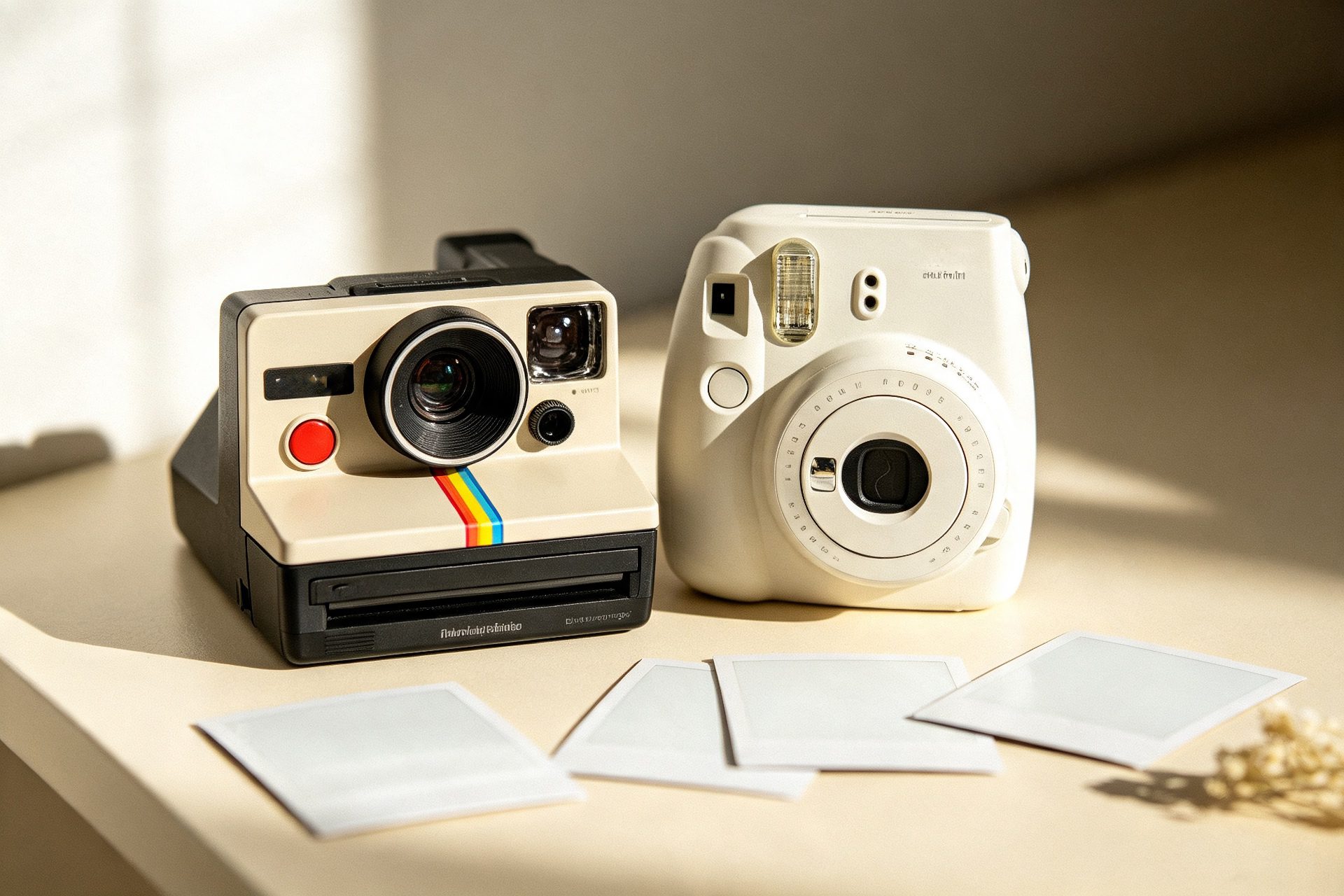
Comparison to Traditional Instant Photography
At a fundamental level, eink instant film and traditional instant photography operate on entirely different principles:
- Imaging mechanism: Traditional instant photography relies on irreversible chemical reactions, where silver halide emulsions react to light to produce an image. Eink instant film works via physical movement of particles controlled by electrical voltage, allowing images to be rewritten thousands of times.
- Usage cost: Each shot taken with a traditional instant camera consumes one sheet of film, carrying a high marginal cost. Eink instant imaging requires no consumables, and updating photos incurs no additional expense.
- Display quality: Traditional film prints are physical outputs with rich color, but are vulnerable to water, sunlight and fading over time. E-ink screens deliver a paper-like texture with crisp monochrome rendering; some models support tri-color display, and images remain permanently visible with zero power draw.
- Flexibility: Once captured, traditional film photos cannot be modified, and failed shots must be discarded. Eink instant imaging allows photos to be updated at any time, with users able to select their favorite shots from their phone gallery for display, offering far greater fault tolerance.
Advantages of E-Ink Instant Film
Portability and Convenience
The portability of traditional instant photography has always been limited by consumables and power requirements. Portable photo printers require users to carry charging cables, special photo paper and even ink ribbons, while battery life remains a constant concern on the go. Instant camera users must also monitor film supply, as running out mid-journey means no more photos can be taken.
Eink instant film products eliminate these pain points entirely. First and foremost is the no charging design: battery-free models contain no internal battery, eliminating range anxiety entirely and requiring no regular charging upkeep, even when used long-term on refrigerators or bag straps. Second is the zero-consumable design, with no need to purchase film or ink cartridges — photos can be updated at any time using only a smartphone.
Eink instant film products can also be made extremely thin and light. Card-sized and fridge-magnet form factors, for example, weigh only a dozen grams, can attach directly to refrigerators and lockers, or clip onto backpacks as accessories with no bulk to carry. Users do not need to set aside space for a printer or learn complex operations; they can transfer photos via smart phone with a single tap, making casual use and on-the-go updates seamless.
Eco-Friendliness Compared to Conventional Instant Film
As low-carbon living becomes a global consensus, the waste generated by traditional instant film is drawing growing scrutiny. A single sheet of conventional instant film consists of multiple layers including a plastic base, silver halide chemical coating and protective layer. Its production consumes significant resources, and discarded film is difficult to biodegrade, placing a burden on the environment. Data shows that billions of sheets of instant film are consumed worldwide each year, generating a substantial volume of solid waste.
Eink instant film reduces consumable waste at the source. A single e-ink screen can be rewritten thousands of times, equivalent to saving thousands of sheets of traditional film. It requires no chemical agents and no single-use packaging, with a service life of several years. For users who regularly update their displayed photos, switching to e-ink means drastically reducing single-use consumables, allowing them to enjoy the experience of physical photos at a much lower environmental cost.

Integration with Modern Photography
E-Ink and Smartphone Photography
Today, smartphones are the primary photography tool for most people. We take hundreds of photos every day, but most remain stored away in galleries and cloud storage, rarely revisited. Digital photos offer undeniable convenience, but lack the tangible presence and warmth of physical prints.
Eink instant film builds a bridge between digital smartphone photos and real-life living spaces. Users do not need to connect to a computer or set up a printer — they simply select a photo in a mobile app and hold the phone near the device to complete the transfer, turning their favorite digital shots into physical displays on desks, refrigerators and more.
This model transforms photos from "digital files" into "everyday decor". For example, a family photo mounted on the fridge can be seen every day while cooking; a travel landscape photo placed by a desk keeps happy memories visible at work; users can also swap in new photos of their children or holiday greetings whenever they like. Compared to traditional printed photos, it costs nothing to update and offers far greater flexibility, bringing digital photos from smartphone galleries into daily life.
Use with Digital Instant Cameras and Portable Photo Printers
Beyond smartphone integration, eink instant film is also being integrated with a wider range of digital imaging devices. Some digital instant camera manufacturers are already exploring e-ink preview and digital film solutions, allowing users to preview shots on an e-ink screen before deciding whether to print a physical copy, drastically reducing wasted film.
For portable photo printers, e-ink imaging products serve as a complementary solution for different use cases. Portable printers are ideal for producing physical prints for long-term keepsakes or gifting to friends and family; e-ink imaging products are better suited for home decor, everyday display and scenarios where images are updated frequently. Used together, they cover both physical keepsake needs and flexible daily display, completing the modern instant photography product ecosystem.

The Future of Photo Printing Technology
Innovations in Compact Photo Printers
In recent years, portable photo printing technology has continuously evolved toward smaller size, greater convenience and improved sustainability. From early dye-sublimation printing to ZINK zero-ink technology, manufacturers have worked to reduce consumable bulk and lower barriers to use. However, any physical printing format will always face inherent constraints around consumable costs and environmental impact.
The addition of e-ink technology opens up an entirely new technical path for portable image output. It moves beyond the assumption that "printing equals physical paper", replacing single-use film with a refreshable electronic medium. As technology advances, the cost of color e-ink is steadily falling and refresh speeds are improving. Future eink instant film products are expected to deliver richer color performance and faster photo transfer speeds, closing the experience gap with traditional printed output.
E-Ink’s Role in Shaping Future Trends in Photography
In the long term, eink instant film is reshaping how people perceive photography. In the past, a photo was understood as a single, static object created for preservation. E-ink transforms photos into updatable, dynamic displays built for everyday visibility. It is not intended to replace traditional photography or printing, but to provide a new medium for image display.
Going forward, e-ink imaging technology will penetrate more areas of daily life. Beyond fridge magnets and small photo frames, it may appear in home decor, wearable accessories, office stationery and more. Its battery-free, no charging properties mean it can be embedded into all kinds of everyday objects, making photo display ubiquitous without the hassle of charging or maintenance.
For the broader photography industry, eink instant film also expands the value of imagery. Photography is no longer just about capturing moments — it is a medium for home decoration and emotional expression. The purpose of taking photos extends from "preserving memories" to "enhancing daily life", opening up entirely new growth opportunities for the imaging market.
From Polaroid’s chemical development processes to today’s e-ink imaging, instant photography has evolved over nearly 80 years. The technology changes, but people’s love for physical photos and their desire for ritual in daily life remain constant. Eink instant film preserves the warmth of physical photos through innovation, while solving the cost, environmental and convenience drawbacks of traditional formats. As the technology continues to mature, it may never fully replace traditional instant cameras or photo printers, but it will certainly become an indispensable branch of instant photography, leading us into a more convenient, low-carbon and engaging new era of photography.